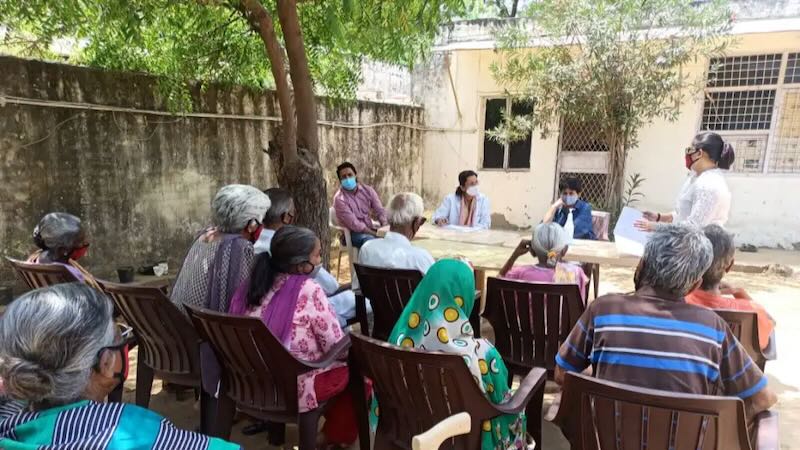
At WARA, care is not just a service - it is a lived experience.
Our blog shares practical insights, real-life situations, and stories from the
world of caregiving, elderly support, recovery, and family coordination. From
understanding daily care challenges to learning how to handle critical moments,
we focus on making care more clear, human, and manageable.
We also share perspectives from caregivers, families, and community experiences
to highlight what truly matters in care - consistency, empathy, and trust.
Through these stories and insights, we aim to help families make better
decisions, stay informed, and feel more confident in managing care for their
loved ones.
Files inside these directories will be shown in reverse chronological order.
Geriatric Care in India - Building a Structured System for Elder Wellbeing
Geriatric care in India requires more than medical treatment. Learn how a structured system combining home care, monitoring, and coordinated healthcare can support elderly individuals with dignity, safety, and continuity.
Caring for elders is no longer just a family responsibility.
With changing lifestyles, migration to cities, and increasing life expectancy,
more families are facing a common challenge - how to ensure consistent, reliable
care for ageing parents.
Medical support alone is not enough.
Elder care requires a system that combines daily assistance, monitoring,
healthcare access, and emotional support.
Ageing is not a problem to solve. It is a phase that needs structured support.
Understanding the Reality of Ageing
As people grow older, their needs change in multiple ways:
Physical strength reduces
Chronic conditions increase
Mobility becomes limited
Emotional needs grow stronger
Care becomes continuous, not occasional.
Challenges Faced by Elders
In many real situations, elders face multiple overlapping issues.
Loneliness and Isolation
With family members living away:
Daily interaction reduces
Emotional support becomes limited
Mental health is affected
Lack of Daily Support
Simple activities become difficult:
Walking and mobility
Cooking and hygiene
Medication management
Health Management Complexity
Elders often deal with:
Multiple medications
Regular checkups
Chronic disease monitoring
Without coordination, care becomes inconsistent.
Limited Access to Immediate Help
In emergencies:
Delays in response
Lack of coordination
Uncertainty in decision-making
Financial and Awareness Gaps
Limited understanding of care options
Difficulty navigating healthcare systems
Budget constraints
The biggest challenge is not illness - it is managing care consistently.
Why Traditional Models Fall Short
Most care systems today are fragmented:
Hospitals treat only when needed
Families manage daily care informally
No central system connects everything
This creates gaps between:
Home care
Medical care
Emergency response
What a Structured Elder Care System Looks Like
Effective geriatric care requires integration.
Daily Care Support
Assistance with routine activities
Medication reminders
Mobility and safety support
Continuous Monitoring
Tracking health conditions
Observing changes in behaviour
Identifying early risks
Healthcare Coordination
Doctor consultations
Diagnostics and follow-ups
Treatment alignment
Emergency Response
Quick activation during critical events
Ambulance and hospital coordination
Family communication
Emotional and Social Support
Regular interaction
Companionship
Engagement in daily life
Care becomes effective when all parts work together.
The Role of Home-Based Care
Most elders prefer to stay in their own homes.
Home-based care ensures:
Familiar environment
Emotional comfort
Better quality of life
But this requires structured support to be reliable.
Integration with the WARA Care System
A connected approach to elder care includes:
HomeCareNet → Daily assistance at home
ElderCareNet → Monitoring and coordination
HealthCareNet → Medical support
Emergency System → Rapid response
AyushCareNet → Recovery and wellness
Platform (Care Ledger) → Visibility and tracking
This creates a continuous care environment.
What This Changes for Families
Peace of Mind
Clear visibility into daily care
Reduced uncertainty
Reduced Burden
Structured support instead of constant worry
Better Health Outcomes
Early detection of issues
Consistent follow-ups
Reliable Emergency Support
Faster response
Coordinated action
The Shift Needed
India is moving from:
Family-only care to
System-supported care
This shift is necessary to handle:
Increasing elderly population
Changing family structures
Rising healthcare complexity
Long-Term Impact
A structured geriatric care system can:
Improve quality of life for elders
Reduce healthcare emergencies
Support families emotionally and practically
Build a sustainable care ecosystem
Final Thought
Caring for elders is not about occasional help.
It is about creating a system that supports them every day, in every situation.
A structured approach ensures that ageing is not filled with uncertainty, but
with dignity, safety, and continuity.
When care is consistent, ageing becomes more secure and meaningful.
Ageing in India - Rethinking Elder Care Beyond Hospitals and Homes
India’s growing elderly population requires more than medical care. Explore how structured community-based living, integrated healthcare, and meaningful engagement can create dignified and sustainable elder care systems.
India is ageing, and the shift is accelerating.
With longer life expectancy and changing family structures, more elders are
living independently - often without consistent support. While medical care has
improved, the systems needed to support daily life, emotional wellbeing, and
long-term care have not evolved at the same pace.
The question is no longer how to treat illness, but how to support living well
in later years.
Elder care is not just about survival. It is about dignity, purpose, and
continuity.
The Changing Reality of Ageing
As the elderly population grows:
More seniors live alone
Families are geographically distant
Chronic conditions require ongoing care
Social isolation increases
Traditional family-based care is becoming harder to sustain.
Why Existing Models Are Not Enough
Most current options fall into two extremes:
Staying at home without structured support
Moving to institutional facilities with limited personalization
Both approaches leave gaps in:
Daily assistance
Emotional wellbeing
Continuous health monitoring
Social engagement
A New Approach - Community-Based Elder Living
A more balanced model is emerging:
Elder-focused living environments supported by structured care systems.
These are not just residential spaces, but integrated care communities that
combine:
Living
Healthcare
Wellness
Social engagement
What a Modern Elder Living System Includes
Daily Living Support
Safe and accessible living spaces
Assistance with routine activities
Age-friendly infrastructure
Healthcare Integration
Regular health monitoring
Access to doctors and diagnostics
Emergency coordination systems
Wellness and Preventive Care
Yoga and physical activity
Nutrition support
AYUSH-based recovery and balance
Social and Emotional Engagement
Group activities and interaction
Cultural and community events
Spaces for conversation and connection
Purpose and Contribution
Sharing knowledge and skills
Mentoring younger generations
Participating in community life
Care improves when elders are engaged, not isolated.
Integration with the WARA Care System
A structured elder living model connects multiple care layers:
HomeCareNet → Daily support within living spaces
ElderCareNet → Monitoring and coordination
HealthCareNet → Clinical access and treatment
AyushCareNet → Wellness and recovery
DharmaCareNet → Community integration and local engagement
Platform (Care Ledger) → Continuous tracking and visibility
This ensures that care is continuous, connected, and reliable.
Beyond Care - Creating a Living Ecosystem
Elder-focused communities are not only about support, but also about
environment.
Such ecosystems can include:
Green and self-sustaining surroundings
Access to nature and open spaces
Opportunities for light activity and participation
Integration with local communities
This improves both physical and mental wellbeing.
Why This Model Matters
Reduces Loneliness
Regular interaction
Community environment
Improves Health Outcomes
Continuous monitoring
Early detection of issues
Supports Families
Reduces caregiving burden
Provides structured and reliable support
Creates Sustainable Systems
Scalable model for growing elderly population
Integration of care and livelihood
Challenges to Address
To make this model successful, certain aspects must be managed:
Maintaining quality of care
Balancing independence and support
Ensuring affordability
Building trust with families
Without structure, it becomes another housing model.
With systems, it becomes a care ecosystem.
A Step Toward the Future of Elder Care
India’s ageing population requires a shift from:
Reactive care to
Continuous, system-supported living
Community-based elder care models provide a path forward by combining:
Infrastructure
Care services
Human connection
Final Thought
Growing older should not mean losing independence, connection, or dignity.
With the right systems, elders can live in environments that support their
health, engage their minds, and respect their experience.
The future of elder care is not isolation - it is connected living with care.