Emergency Health Centers - Rapid Response When Every Second Matters
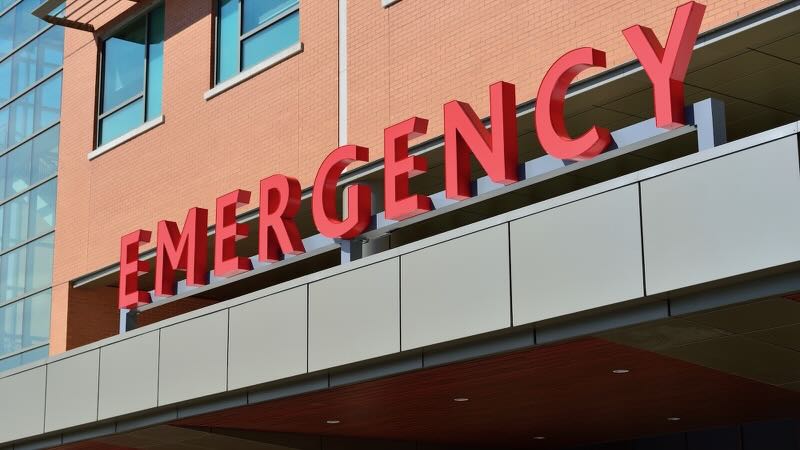
Emergencies do not give time to prepare.
In critical moments - heart attacks, strokes, accidents, or sudden illness - the difference between life and death often depends on how quickly the first response happens.
In many areas, especially outside cities, the biggest challenge is not treatment, but delay in reaching treatment.
Emergency Health Centers are designed to solve this by ensuring that response begins immediately, and coordination happens without confusion.
In emergencies, speed matters. But coordination matters even more.
What Are Emergency Health Centers
Emergency Health Centers are local response points designed to:
- Provide immediate stabilization
- Coordinate ambulance and transport
- Connect with doctors remotely
- Ensure smooth transfer to hospitals
They are not full hospitals, but first-response systems that activate care quickly and guide the next steps.
Why Emergency Response Fails
In many real situations, delays happen because:
- No one knows what to do first
- Ambulance is called too late
- Hospitals are not pre-informed
- Patient reaches unprepared facilities
These delays reduce survival chances and increase complications.
Emergency systems must solve time, clarity, and coordination together.
How the System Works
The experience for the patient is simple, but the system works in layers.
Step 1: Emergency Trigger
An emergency can be triggered through:
- Caregiver presence (HomeCareNet)
- Patient or family alert
- Monitoring system (future sensors / alerts)
Once triggered, the system activates immediately.
Step 2: Immediate First Response
At the nearest care point or through trained personnel:
- Basic stabilization begins
- Oxygen, positioning, and initial support
- Vital signs are checked
This is critical in the first few minutes.
Step 3: Remote Medical Guidance
Doctors are connected through a structured system:
- Case details are shared quickly
- Immediate instructions are given
- Stabilization is guided in real time
Step 4: Ambulance Coordination
Instead of searching manually:
- Nearest ambulance partner is activated
- Case details are shared in advance
- Transport is aligned with hospital readiness
Step 5: Hospital Preparation
Before the patient arrives:
- Hospital is informed
- Basic case details are shared
- Admission readiness improves
Step 6: Transfer and Continuity
After reaching the hospital:
- Treatment continues
- Family is supported in coordination
- Records remain available for reference
The goal is not just to move the patient, but to move the system with the patient.
What This Changes for Families
Faster First Response
- Immediate action instead of delay
- Critical minutes are not lost
Reduced Panic
- Clear process during emergencies
- Guided steps instead of confusion
Better Survival Outcomes
- Early stabilization
- Faster hospital readiness
Continuous Support
- From home to hospital
- Not left alone during critical moments
Integration with the WARA Care System
Emergency Health Centers work within a connected ecosystem:
- HomeCareNet → First detection and on-site support
- ElderCareNet → Monitoring and emergency coordination
- HealthCareNet → Doctor guidance
- Hospital Network → Treatment and admission
- Platform (Care Ledger) → Case tracking and data flow
This ensures that emergency care is not isolated, but fully coordinated.
The Role of First Responders
One of the most critical parts of emergency care is the first responder layer.
Instead of maintaining a large fixed team, the system relies on:
- Trained caregivers
- Local responders
- Partner ambulance teams
This makes the model:
- Scalable
- Cost-effective
- Locally responsive
Challenges in Emergency Systems
To make emergency care reliable, systems must handle:
- Response time variability
- Coordination gaps
- Communication delays
- Training quality
Without structure, response becomes inconsistent.
With systems, response becomes dependable.
A Safety Layer for Every Home
Emergency Health Centers act as a safety layer that ensures:
- Help is reachable
- Action is immediate
- Coordination is structured
They bring confidence to families who otherwise feel uncertain during crises.
Final Thought
Emergencies cannot be prevented, but their outcomes can be improved.
Emergency Health Centers ensure that when something goes wrong, response is fast, structured, and coordinated.
In critical moments, a connected system can save lives.