Remote Health Centers - Bringing Healthcare Closer, Without Leaving the Village
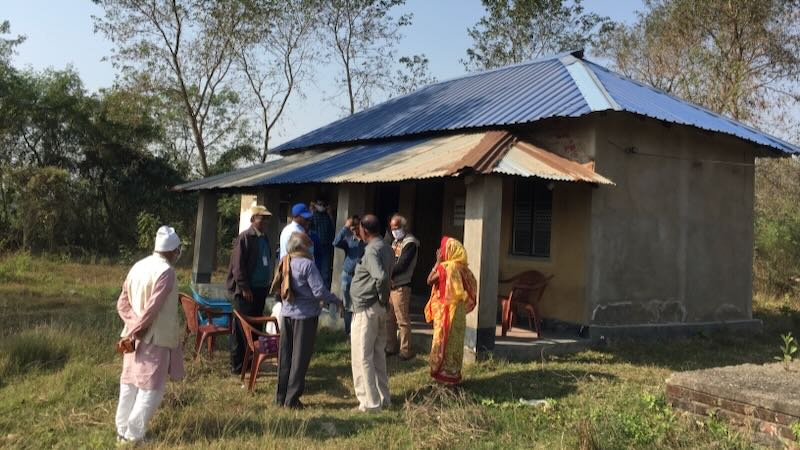
Accessing a doctor should not require a full day of travel.
In many rural and semi-urban areas, a simple consultation often means long journeys, lost income, and delayed treatment. For elderly individuals and chronic patients, this delay can make conditions worse over time.
But what if care could begin where people already are?
Remote Health Centers are designed to solve this exact problem - by bringing structured healthcare access closer to communities without depending entirely on physical hospitals.
What Are Remote Health Centers
Remote Health Centers are small, locally operated care points where basic health assessment is done, and doctors are connected remotely through a coordinated system.
Instead of replacing hospitals, they act as an access layer that connects:
- Patients in villages
- Trained local health workers
- Doctors in cities
- Diagnostic and hospital networks
Care does not need to move. The system connects it.
How the System Works
The process is simple for the patient, but structured behind the scenes.
Step 1: Visit the Local Center
The patient visits a nearby care point within the community.
There is no long travel, no waiting in crowded hospitals, and no disruption to daily life.
Step 2: Local Health Worker Assessment
A trained caregiver or health worker:
- Checks vital signs
- Understands symptoms
- Records basic observations
This ensures that the case is documented clearly before doctor involvement.
Step 3: Digital Record Creation
All details are recorded in a structured system (similar to a Care Ledger or EMR):
- Patient history
- Current symptoms
- Observations
This creates continuity for future visits.
Step 4: Remote Doctor Consultation
A doctor reviews the case remotely:
- Through video or structured reporting
- Based on recorded data and observations
This allows expert consultation without requiring travel.
Step 5: Guidance and Next Steps
The patient receives:
- Prescription or advice
- Referral if needed
- Follow-up plan
The local center helps coordinate the next steps.
The patient experiences simplicity. The system handles complexity.
Why This Model Matters
For many families, healthcare challenges are not medical - they are logistical.
Common problems include:
- Distance from hospitals
- Travel costs and time
- Delayed consultations
- Lack of continuous follow-up
Remote Health Centers reduce these barriers by making care:
- Accessible - closer to home
- Timely - faster consultation
- Affordable - reduced travel and cost
- Consistent - structured follow-ups
The Role of Local Caregivers
One of the most important parts of this model is the local workforce.
Trained caregivers and health workers:
- Become the first point of contact
- Build trust within the community
- Support ongoing care and monitoring
This not only improves healthcare access but also creates local livelihood opportunities.
Connecting to a Larger Care System
Remote Health Centers work best when they are part of a larger system.
When integrated properly, they connect with:
- HomeCareNet → for ongoing home support
- ElderCareNet → for monitoring and coordination
- HealthCareNet → for doctor and diagnostic access
- DharmaCareNet → for community-level care access
This ensures that care is not isolated, but continuous.
Beyond Consultation - Building Continuity
The real value of this model is not just consultation, but continuity.
With structured tracking:
- Patient history is preserved
- Follow-ups are easier
- Risks are identified early
Healthcare improves when information is not lost between visits.
Challenges to Be Solved
While the model is powerful, execution matters.
Key challenges include:
- Training quality of local workers
- Reliable connectivity and systems
- Consistent protocols
- Coordination between services
Without structure, the system can break down.
With the right processes, it becomes scalable and reliable.
A Step Toward Accessible Healthcare
Healthcare should not depend on geography.
Remote Health Centers show that with the right combination of:
- Local presence
- Trained workforce
- Structured systems
- Technology-enabled coordination
care can reach people without requiring them to travel far.
Final Thought
Good healthcare is not only about hospitals.
It is about access, continuity, and coordination.
Remote Health Centers bring these elements together by connecting people, processes, and technology into a single system.
When care is structured and connected, distance stops being a barrier.